How to Introduce a Cat to a Dog: 8 Vet-Verified Tips



When you adopt a new cat or dog, one of the most challenging parts is introducing them to other members of the family, including your other pets. Often, your cat or dog won’t understand that this new animal is a part of the family. They’re just an intruder!
How you introduce your dog and cat has a huge impact on their future relationship. If they are introduced slowly and correctly, they’ll likely learn to at least put up with each other’s presence. If you don’t, you may end up with a dog and a cat that are arch-enemies.
Below, we’ve explained everything you need to know about introducing a dog and a cat together.

The 8 Tips for Introducing a Cat to a Dog
1. Start By Keeping Them Apart
You should start with your pets completely separate. Put them in separate enclosed areas or rooms and leave them there. You can allow them to explore the main living area at different times, but they shouldn’t be allowed to see each other at all. You should keep each animal in a “safe area” where they can feel secure. The area should have everything your dog and cat may need, including a litter box, food bowls, scratching posts, a bed, hiding spots, and toys. You should also ensure that there isn’t anything dangerous in the pet’s room. Don’t house your cat with poisonous house plants, for instance.
You should also provide your cat with plenty of tall places to escape to as needed. They should never be stuck on the floor with your dog, as this can be a dangerous situation.
At first, your goal should be to make the new animal comfortable in their safe area for several days.
2. Do Scent Swapping
To start gradually introducing your pets, you can try scent swapping. This is a simple process: just wipe a clean cloth on each pet and rub it on objects around your home. You can also leave the cloth in your cat’s space for them to investigate. This allows your pets to gradually become accustomed to each other’s scent while keeping them safely separated.
If either pet avoids or reacts badly to the scent, slow down and repeat the process.
3. Feed Them “Together”
One moment in the day that any animal associates with happiness is mealtime. Therefore, we’re going to utilize these positive feelings to our advantage.
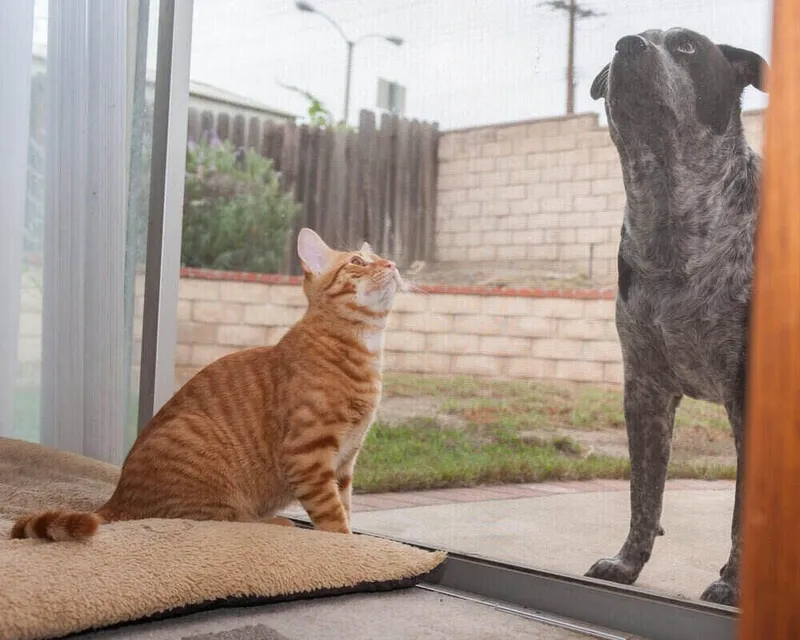
After your new pet has settled in, start feeding them on opposite sides of a closed door. They will be able to hear and smell each other but not have any physical contact. This setup will keep your cat from feeling threatened, and it will provide a chance for your dog to get used to the cat.
Continue this until both of your pets are completely calm with the process. Preferably, they shouldn’t even pay attention to the door at all.
4. Begin Meetings
No matter what step you’re on, you should keep the lessons as short as possible. Just a couple of minutes is often enough – even less at the beginning.
You don’t want to stress either animal out needlessly, which will likely happen if you let the sessions drag out.
Repeat the sessions daily. Regular contact is important so that you don’t lose any progress. Once or twice a day is often a nice sweet spot to settle in.

5. Keep Sessions Short and Sweet
No matter what step you’re on, you should keep the lessons as short as possible. Just 5 minutes is often enough – even less than that if you’re just starting cracked-door introductions.
You don’t want to stress either animal out needlessly, which will likely happen if you let the sessions drag out.
Repeat the sessions daily. Again, you don’t want to use the sessions too much, as this will likely stress the animals out. However, regular contact is important so that you don’t lose any progress. Once a day is often a nice sweet spot to settle in.
6. Be Patient
These beginning steps can take a lot of time. It may take a month for your feline and dog to warm up to each other. If you have a puppy or an untrained dog, this will take even longer. Often, introducing a new cat to an established dog is easier, as then the dog at least has some training.
If you just adopted a dog, be sure to train them while you’re introducing them to your cat. Some simple commands like “stay” and “leave it” can be boons when you’re trying to teach your cat how to interact correctly with your dog.
Group training classes are often extremely helpful, especially since they provide your dog with socialization as well. Even with training, though, this introduction can take a long time! If you would ever feel like you need some assistance in this process, don't hesitate to reach out to a veterinarian or animal behaviorist.
7. Allow the Pets Together Freely
Once your dog completely ignores your cat (or at least mostly ignores your cat), you can drop the leash and allow your dog to walk around the room freely. Don’t unleash them, as you want an easy grab point if the dog decides that the cat is a tasty snack.
If your dog goes after the cat or the cat seems needlessly stressed, go back to an earlier stage and try again. You want each step to be so small that your dog or cat can’t fail. Very tiny steps are the best option here.
If either animal shows tension or stress, then the step wasn’t small enough. Go back and try again.
Having a cat-only room for your feline to escape to and plenty of high areas for them to escape to is particularly important in this stage. If the cat doesn’t feel confident, there is a large possibility that they will run, which will only encourage your dog to chase them.
8. Proceed Cautiously
You should never allow your dog and cat to be unsupervised together—even if you’ve gone through all of these steps. These animals are very unpredictable. Dogs that have been friends with cats for years may suddenly chase one and seriously harm them.
Therefore, you should always proceed slower than you think you should.
Summing Up
Introducing a cat and dog together requires adequate planning and patience. It also requires a good knowledge of their body language and the willingness to step back if necessary. It involves a bunch of very small baby steps. You want to go slower than you probably need to. Going too slow and taking longer is often a better option than going too fast.
If you notice any upset in either animal, go back to an earlier step and try again. If your dog chases your cat or your feline seems uncomfortable, it’s a sign that you moved too fast.
Often, introductions go wrong because the animals are pushed to get along too fast. As long as you go slow, follow the proper steps, and closely observe their reactions, most dogs and cats can get along just fine.
However, some dogs simply have too high of a prey drive to not chase a cat. In these cases, even a perfect introduction can only do so much. If you’re considering adopting a cat, be sure your dog has been properly socialized with cats before committing to the adoption.
See also:
Sources
https://www.cats.org.uk/help-and-advice/cats-and-your-family/dogs-and-other-pets
Featured Image Credit: ArtTower, Pixabay
Expert dog care, straight to your inbox
News, insights, expert advice, and everything dog.

No spam — unsubscribe anytime.
By signing up, you agree to our Terms & Conditions and Privacy & Cookies Policy.
How useful was this post?
Click a star to rate. You can leave written feedback afterwards. (We read all feedback.)
Kristin loves to help pet parents create a fulfilling life for their pets by informing them on the latest scientific discoveries and helping them choose the best products for their pets. She currently resides in Tennessee with three cats, four dogs, two fish, and a lizard, though she has dreams of owning chickens one day!